

Adobe Creative Cloud
Designing operating clarity during a major business model transformation
Context
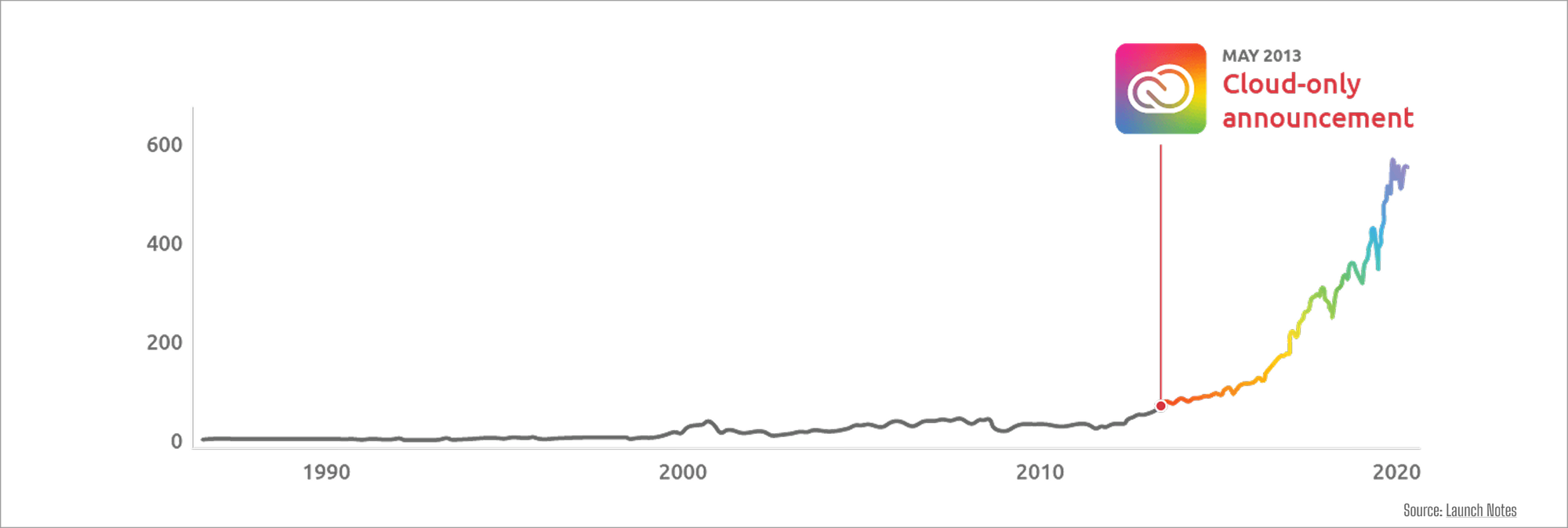
In 2013, Adobe was undertaking one of the most significant shifts in its history — moving from boxed software to a cloud-based subscription model. This transition required not only new technology, but new ways of coordinating decision-making authority, risk tolerance, and execution across a highly visible global platform.

The Structural Challenge
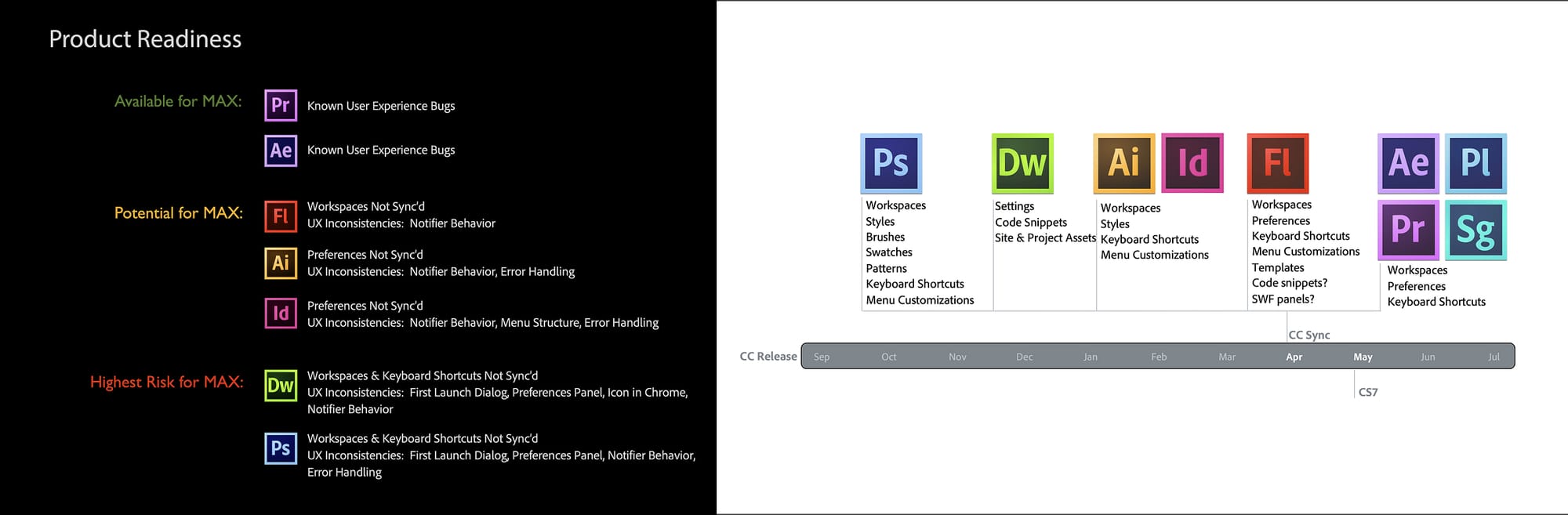
Adobe’s siloed legacy product development teams operated on different timelines with varying methodologies, meaning coordinating around a singular goal would require a new way of working. The organization needed to:
- Align multiple large product teams around a shared cloud vision
- Deliver consistency across historically independent tools
- Support rapid iteration without eroding user trust
- Coordinate decision-making under intense public and internal pressure
- Adhere to regulatory and compliance priorities
The challenge wasn't a lack of ideas or talent. It was maintaining operating coherence, decision clarity, and user trust while risk, visibility, and pace were all increasing simultaneously.
What Changed
I partnered with senior leaders and cross-functional teams as an embedded design and decision partner, designing clarity across systems, operating rhythms, user experience and decision-making authority during a high-risk business transformation. This included:
- Externalizing executive intent into shared design and operating principles
- Designing cross-product UX decision frameworks to reduce fragmentation
- Establishing a north-star vision for the key cloud-enabled feature
- Supporting iterative delivery while maintaining trust and predictability for users
Design was used not just to shape interfaces, but to align how the organization evolved during a period of rapid systemic change.
Business Impact
The work contributed to:
- a more coherent Creative Cloud v 1.0 user experience across products
- Faster alignment across product, engineering, and leadership teams
- A foundation for iterative, cloud-native development practices
- Strong adoption of Creative Cloud as Adobe transitioned to a subscription model
Most importantly, the organization gained operating clarity during a high-risk transformation, allowing innovation to compound rather than reset.
What This Looked Like In Practice
- Partnering closely with product, engineering, and executive leadership during Adobe’s transition from boxed software to a cloud-based subscription model
- Identifying cross-product consistency as a critical trust signal for users navigating a new delivery paradigm and a risk-reduction mechanism for the business
- Designing Sync Settings as a foundational capability, not a surface feature, enabling continuity across devices and products
- Orchestrating UX alignment across historically siloed product teams with deeply ingrained workflows and UI patterns
- Balancing speed and quality under an aggressive, externally visible launch timeline (Adobe MAX)
- Using research and usability signals to guide incremental rollout decisions post-launch rather than treating launch as “done”
Why This Matters
This work demonstrates how design-led clarity can support large-scale transformation, not by prescribing answers but by creating the conditions where better decisions hold across teams and time.